
Watch Out for These Motorcycle Crash Settlement Traps
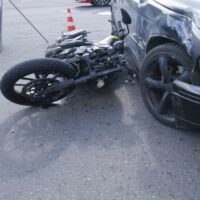
In California, out-of-court settlements resolve over 95 percent of motorcycle crashes and other personal injury claims. These resolutions benefit victim/plaintiffs in several ways. For example, a settlement is a final resolution. If an insurance company loses a court verdict, it could keep the matter tied up in appeals for several years. However, if the insurance company settles a case, it immediately writes a check. However, as outlined below, that check may not be large enough to fully compensate the victim/plaintiff.
To help ensure maximum compensation, an Oceanside personal injury lawyer must anticipate some common legal defenses and be ready to refute them. Also as outlined below, evidence is usually the key. Since victims present their cases first, they can effectively pull the pin on the grenade and absorb the force of that explosion. This preemptive strategy usually leaves the insurance company with no alternative but to settle the case on victim-friendly terms.
Last Clear Chance
All drivers, victims and tortfeasors (negligent drivers) alike, have a duty of care at all times. Victims breach their duty of care if they miss the last clear chance to avoid the wreck.
A left-turn motorcycle crash is a good example. Assume Phil, who is waiting to make an unprotected left turn against traffic, doesn’t see Tom approaching on his motorcycle. So, Phil turns directly into Tom’s path. Tom bangs into Phil’s car, knocking him off his bike and severely injuring him.
Phil’s insurance company might argue that Tom had the last clear chance to avoid the crash. Since Tom didn’t swerve out of the way or slam on his brakes, he was legally responsible for the wreck.
However, the defense is the last clear chance, not any possible chance. Bikers who slam on their brakes or swerve suddenly normally lose control of their bikes. Additionally, these unexpected maneuvers surprise other drivers, who often respond by swerving or slamming on their brakes.
To defuse this defense, an Oceanside personal injury lawyer normally introduces evidence about weather and/or traffic conditions at the time, to establish the fact that the motorcycle rider did not have a “clear” chance to avoid a crash.
Comparative Fault
Last clear chance flips legal responsibility and is a complete defense in personal injury cases. Comparative fault shifts part of the blame for a crash and thus reduces the victim’s compensation.
Let’s return to Phil and Tom and change the facts a bit. Assume Phil was intoxicated and Tom was speeding. On the surface, they both appear equally (or almost equally) at fault.
So, an Oceanside personal injury lawyer must maximize Phil’s fault and minimize Tom’s responsibility. Tom’s lawyer may call an expert witness to the stand who testifies about the severe impairing effects of alcohol. Tom’s lawyer might also argue that, given the traffic weather, and other conditions at the time, Tom was riding at a reasonable speed, regardless of the posted speed limit.
California is a pure comparative fault state. Even if the tortfeasor was only 1 percent responsible for the crash, the victim is entitled to a proportionate share of compensation. This compensation usually includes money for economic losses, such as medical bills, and noneconomic losses, such as pain and suffering.
Work With a Hard-Hitting San Diego County Lawyer
Injury victims are entitled to substantial compensation. For a confidential consultation with an experienced personal injury lawyer in Oceanside, contact the Pursley Law Firm. We routinely handle these matters throughout the Golden State.
Source:
judicature.duke.edu/articles/going-going-but-not-quite-gone-trials-continue-to-decline-in-federal-and-state-courts-does-it-matter/
