


Are Granny Cams Legal in California?
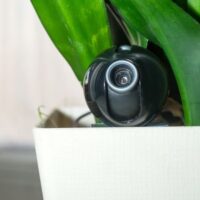
Surprisingly, granny cams are legal in California. We say “surprisingly” because the Golden State is well-known for its privacy laws. For example, California is one of the nation’s only two-party audio recording consent states. Both parties must consent before either party can record the conversation.
If properly presented, video surveillance evidence is very compelling in court. Basically, a camera is an eyewitness to nursing home abuse, and that eyewitness is never incorrect or biased, assuming a lawyer lays the proper foundation.
A good San Marcos personal injury lawyer uses all kinds of evidence to prove liability, or legal responsibility, by a preponderance of the evidence, or more likely than not. Usually, the nursing home that employed the worker who committed an assault or other intentional tort of abuse is the legally responsible party in these matters.
Granny Cam Pros and Cons
A moral teacher once said that everything is legal, at least from a moral perspective, but not everything is beneficial, from a practical perspective.
We discussed the benefits of hidden in-room surveillance footage above. Frequently, this evidence makes the difference between maximum compensation for nursing home assault injuries and settling for less.
Adverse effects on staff morale and over-reliance on this kind of evidence may be the two biggest granny cam cons.
Hidden surveillance cameras usually don’t stay hidden for long. Almost inevitably, someone sees the camera or someone, usually the resident, unintentionally spills the beans. When that happens, staff morale usually drops.
No one likes to be under surveillance for any reason. This factor is especially significant at many mostly-Medicare nursing homes and rehabilitation facilities. Typically, staff morale is low to begin with. So, a granny cam might do more harm than good.
Additionally, since this evidence is so persuasive in court, many San Marcos personal injury lawyers over-rely on it. Then, if the footage is inadmissible or unpersuasive for whatever reason, maximum compensation is usually unavailable.
Compensation in a nursing home abuse case usually includes money for economic losses, such as medical bills, and noneconomic losses, such as pain and suffering.
Using Granny Cam Footage in Court
Before a San Marcos personal injury lawyer presses the play button, a lawyer must address admissibility, reliability, and presentation concerns.
Video footage is only admissible in court if the image truly and accurately depicts the events it recorded. So, the camera’s operator must usually testify that the camera was in good working order, nonfunctioning cameras are removed from service (a difficult element to establish if the owner only has one camera), and the maintenance record is current.
This bare minimum testimony usually produces minimal results. For maximum effect, the witness must testify about the camera’s technical capabilities. If necessary, a lawyer partners with an expert witness to establish these capabilities.
Finally, most SoCal courts have large, high-definition video screens which are ideal for presentation. That’s assuming the lawyer has everything connected properly, the court’s wi-fi is good, and the lawyer knows how to operate the projector or other device. Nothing tanks a presentation faster than an error message.
Count on a Hard-Working San Diego County Lawyer
Injury victims are entitled to substantial compensation. For a confidential consultation with an experienced personal injury lawyer in San Marcos, contact the Pursley Law Firm. Virtual, home, and after-hours visits are available.
Source:
vae.witness.org/about-video-as-evidence/


