


How Dash Cam Footage Can Strengthen a Car Accident Claim
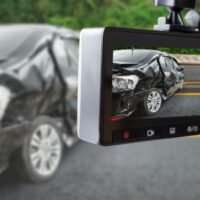
Every disputed car accident claim eventually comes down to the same question. Whose version of events actually happened? Police officers do their best to reconstruct a crash from skid marks and secondhand statements, but they usually only hear one side of the story, especially if the other driver was too injured to talk at the scene. A dash cam changes that equation. It does not get rattled, does not have a stake in the outcome, and does not forget what it saw.
More California drivers are installing them every year, and insurance companies are taking notice. When footage exists and it is clear, a fault dispute that might otherwise drag on for months can resolve in a matter of weeks.
Why Fault Disputes Slow Down Claims
Human memory is not a reliable evidence source, even when nobody is lying. Adrenaline narrows attention. Drivers often fixate on the moment of impact and lose track of what happened in the seconds before it. Without an independent record, the outcome often depends on who sounds more convincing rather than what actually occurred. That is exactly the kind of gap insurance adjusters are trained to exploit.
What Dash Cam Footage Actually Proves
Good footage captures the small details that arguments tend to erase, like following distance, brake light timing, and whether a turn signal was used before a lane change. It is especially useful in these situations:
- Rear-end collisions where the other driver claims a sudden, unexplained stop
- Disputed intersection crashes involving conflicting accounts of who had the light
- Hit-and-run incidents where a license plate is the only lead investigators have
- Lane change and merging collisions where fault often comes down to a matter of feet
- Staged or exaggerated claims, since footage of the moments before impact tends to expose an inconsistent story
The Legal Ground Rules in California
Dash cams are legal in California, but they cannot be mounted just anywhere. Under Vehicle Code section 26708, a video event recorder may only be placed in one of three specific zones on the windshield: a 7-inch square in the lower corner farthest from the driver, a 5-inch square in the lower corner nearest the driver and outside the airbag deployment zone, or a 5-inch square at the center top of the windshield. Footage recorded from a properly mounted camera, and later shown to be authentic and unedited, is generally usable as evidence in a California injury claim.
Preserving the Footage Matters as Much as Capturing It
Recording the crash is only half the job. Most dash cams loop and overwrite old footage within hours or days, so the file has to be saved immediately, not after a claim has already started to stall. Paired with the police report and any available witness statements, footage often removes the guesswork an insurance company relies on to delay or undervalue a claim.
If you have dash cam footage of a crash, do not let it sit untouched on a memory card while an adjuster drags out the process. As Carlsbad car accident attorneys, we know how to build a claim around solid evidence and push back when an insurer tries to shift blame that was never yours to begin with. Contact the Pursley Law Firm for a free consultation before that footage gets overwritten or the case gets more complicated than it has to be.


