


Who’s Actually at Fault in That 5 MPH Parking Lot Fender Bender?
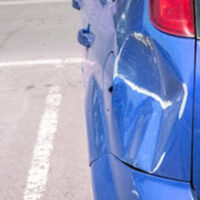
Parking lot crashes rarely look dramatic. Nobody calls 911 for a cracked bumper and a sore neck. But insurance adjusters love that low-speed reputation, because it lets them treat these claims as a coin flip and split the blame down the middle. That approach ignores a legal wrinkle that actually decides who owes what.
The Private Property Problem
Most shopping center and grocery store lots sit on private property, and that matters more than people assume. Under California Vehicle Code Section 21107.8, the rules of the road (yielding, right of way, speed limits) generally do not automatically apply to a privately owned parking facility unless the property owner has posted specific signage at every entrance declaring the lot subject to those regulations. Without that posting, a responding officer often cannot cite either driver for a Vehicle Code violation, even if one driver clearly caused the wreck.
That does not mean the crash becomes a legal free-for-all. It means the case shifts from a traffic citation into an ordinary negligence claim, where a driver’s duty of reasonable care still applies under general California tort law. The absence of a ticket is not the same as the absence of fault.
Fault Still Follows a Pattern
Even without posted signage, parking lots operate on predictable habits that courts and insurers recognize. Vehicles traveling through a main feeder lane typically have priority over cars pulling out of individual parking spaces. At an uncontrolled crossing point inside the lot, the vehicle that arrives first usually has the right of way, and the driver on the left is expected to yield to the driver on the right when both arrive together. Backing out of a space almost always shifts the burden onto the backing driver to prove the other car was not visible or not reasonably avoidable.
Low Speed Does Not Mean Low Injury
A vehicle moving at five or ten miles an hour can still cause a real whiplash injury, a wrist fracture from bracing against a steering wheel, or a disc injury that does not show symptoms until the next morning. Because these crashes rarely involve independent witnesses, the physical evidence often disappears fast. Store parking lot cameras frequently overwrite footage within days or weeks, which is why getting a preservation request out early can make or break a claim.
Comparative Fault Cuts Both Ways
California follows a pure comparative fault rule, which means a driver who was partially responsible for a parking lot collision can still recover compensation, just reduced by their share of the blame. That cuts in favor of injured drivers who assume that any fault on their part disqualifies them entirely. It also means insurers cannot simply deny a claim outright just because liability looks split at first glance.
Parking lot crashes get dismissed as minor far too often, both by the drivers involved and by the companies that insure them. If you were injured in a low-speed collision in a store or restaurant parking lot, you deserve a real evaluation of fault, not a shrug and a fifty-fifty split. We handle these cases regularly for clients throughout the region, and our Oceanside car accident attorneys at the Pursley Law Firm can review your crash, pull the footage before it disappears, and tell you honestly what your claim is worth.
Source:
leginfo.legislature.ca.gov/faces/codes_displaySection.xhtml?lawCode=VEH§ionNum=21107.8


